
Separate robot and rack
The buffer rack is separate from the robot. The robot moves underneath, lifts the rack and transports it.
Lifting series
A mobile chassis, collaborative arm and lifting mechanism in one platform for flexible production across multiple workstations and product types.
Talk to an expert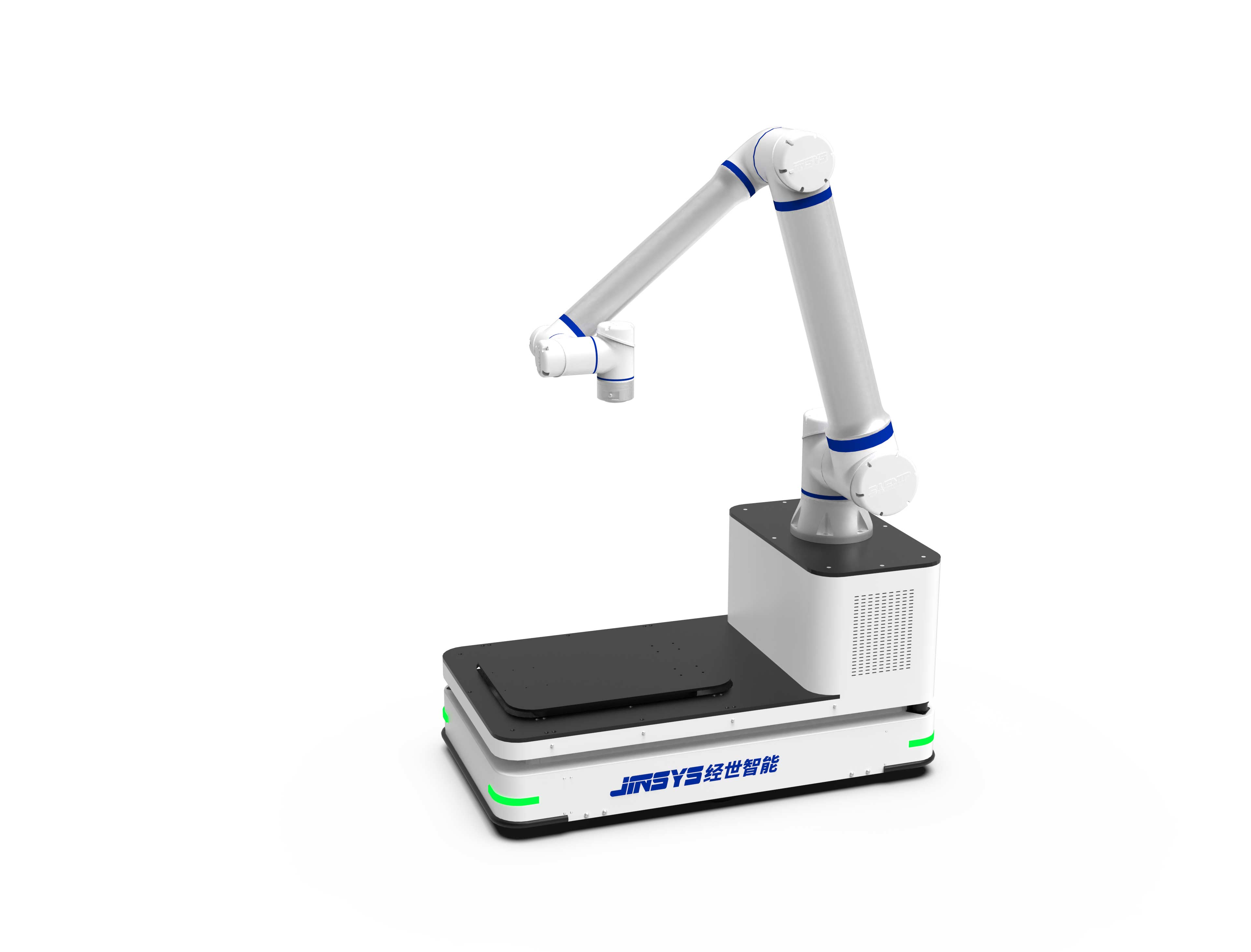
DESIGNED TO WORK
The buffer rack is separate from the robot. The robot moves underneath, lifts the rack and transports it.
The robot transports a full rack efficiently to the destination, then its collaborative arm picks and places individual items at each workstation.
Separating the chassis from the rack allows material preparation and transport to run in parallel, significantly improving production logistics efficiency.
Efficiently deliver complete loaded material racks from line-side supermarkets to assembly stations while collecting empty bins and racks on the same cycle.
Provide an intelligent logistics connection between manual work areas and highly automated production lines, automating material transfer and handover between the two operating environments.
Provide high-capacity, dense static or semi-dynamic buffering for standardized processes with steady material consumption and straightforward equipment connections.
For long-distance transport between floors, workshops or warehouses, larger buffer backpacks increase the volume moved per trip and reduce return journeys.
SPECIFICATIONS
| Parameter | ML-610 |
|---|---|
| Basic specifications | |
| Total payload | 600 kg |
| Dimensions (L × W × H) | 1350 × 720 × 750 mm |
| Standard turning diameter | 1550 mm |
| Chassis pose compensation | Real-time dynamic |
| Combined positioning accuracy | ±0.5 mm |
| End-effector grasp positioning | Supports direct grasping without vision guidance |
| Operating system | MCR-Master integrated operating system |
| Chassis specifications | |
| Drive type | Differential drive / dual-steering-wheel omnidirectional movement |
| Motion type | Straight-line travel and differential rotation / omnidirectional movement |
| Navigation method | QR-code navigation / combined laser SLAM and QR-code navigation |
| Navigation position accuracy | ±10 mm |
| Navigation angular accuracy | ±1° |
| Maximum travel speed | 1.4 m/s |
| Collaborative arm specifications | |
| Degrees of freedom | 6 |
| Rated end-effector payload | 10 kg |
| Working radius | 1400 mm |
| Battery performance | |
| Battery capacity | 40 Ah |
| Combined operating time | 8 h |
| Charging time after full discharge | 2 h |
| Charging method | Automatic charging (standard); manual battery replacement (optional) |
| Lifting specifications | |
| Lifting mechanism travel | 60 mm |
| Safety protection | |
| Obstacle-avoidance LiDAR | 2 sensors, diagonally arranged for 360° coverage |
| Safety protection | Static protection during arm operation; safe arm HOME position; remote emergency stop; emergency stop button; speaker; status lighting; collision strips; 3D obstacle avoidance (optional) |
| Upper-module interfaces | |
| Interfaces | I/O, Ethernet, serial and USB |
| Optional features | |
| Other options | 3D vision bin picking; network-independent communication |
Contact the JINSYS team to confirm the configuration for your application.